Elvis and the Birth of Rock and Roll, Thursday, May 9th at Taschen NYC
Elvis and the Birth of Rock and Roll, Thursday, May 2nd at Taschen Beverly Hills
Elvis and the Birth of Rock and Roll
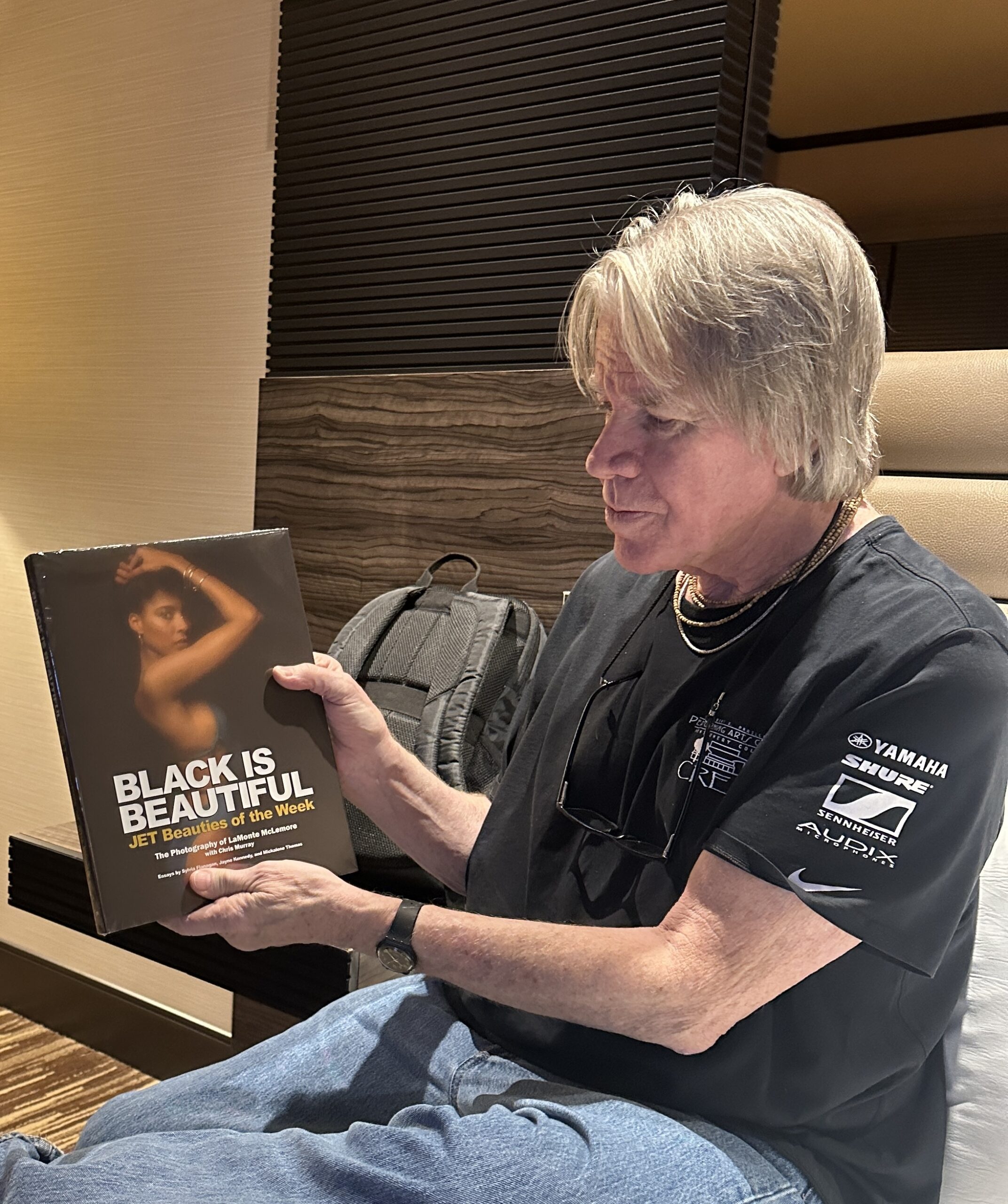
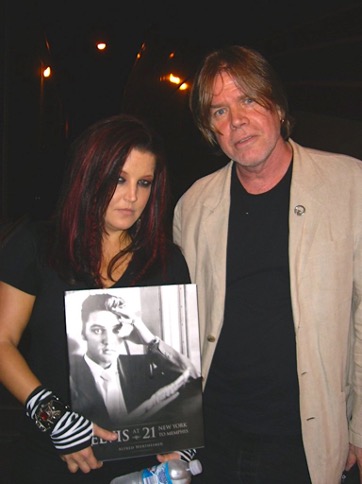
Alfred Wertheimer’s new book Elvis and the Birth of Rock and Roll is a ‘tour de force’. Published by Taschen, it is being launched next week in Los Angeles and the following week in New York City. Taschen is an extraordinary publisher and Elvis and the Birth of Rock and Roll is the ultimate presentation in book form of Alfred Wertheimer’s photographs of Elvis Presley in 1956.
It is my honor to be the editor of Elvis and the Birth of Rock and Roll and to have contributed an essay to the book. As part of the celebration of the release of Alfred Wertheimer’s monumental publication I present here for the first time rare footage of your humble editor circa 1956, imitating Elvis Presley, for your pleasure and amusement.
Elvis Presley’s “Hound Dog” featuring Chris Murray from Chris Murray on Vimeo.
Next week in Los Angeles on May 1st the Grammy Museum will host Alfred Wertheimer for a discussion of his new book along with Bob Santelli, the Director of the Grammy Museum, and myself at 7:00 p.m. On May 2nd the Beverly Hills Taschen store will host Alfred Wertheimer, who will be inscribing the limited edition book for collectors from 7:00 to 9:00 p.m. On May 9th the New York Taschen store will launch Elvis and the Birth of Rock and Roll with Alfred Wertheimer in attendance, also from 7:00 to 9:00 p.m.
J.F.K., Jacques Lowe, and Nancy Pelosi at the Newseum
Copyright © Gene Moz. All Rights Reserved. Govinda Gallery Director Chris Murray presenting the Honorable Nancy Pelosi with the invitation card from Jacques Lowe’s 1998 Govinda Gallery exhibition.
It was fifteen years ago this spring that Govinda Gallery presented J.F.K. Remembered, exhibiting for the first time the Kennedy photographs of Jacques Lowe. The exhibition was a remarkable one and featured photos of President Kennedy and his family. Former Kennedy Press Secretary Pierre Salinger attended the opening that evening and put his unforgettable voice on Govinda’s answering machine announcing the exhibition for the duration of the show. Jacques Lowe attended the opening at Govinda with his daughter Victoria Allen and everyone had a great time.
I attended the opening reception for Creating Camelot: The Kennedy Photography of Jacque Lowe at the Newseum April 11th. Some of the VIPs attending included House Minority Leader Nancy Pelosi, CBS president Les Moonves, Washington Post executive editor Ben Bradlee and secret service agent Clint Hill, among others. I had the great pleasure of introducing Victoria Allen to Nancy Pelosi and presented Pelosi with a vintage invitation from Jacques Lowe’s exhibition at Govinda Gallery in 1998, which she enjoyed very much.
Copyright © Gene Moz. All Rights Reserved. Carlotta Hester and Victoria Allen at the Creating Camelot opening recption.
Booker T., Joel Brodsky, and the White House
Potatoe Hole, Booker T.’s album featuring Drive By Truckers and Neil Young (Anti Records).
I’ve often thought that Booker T. and the MG’s might just be the great American band. Apart from their own music, they were the band for more hits than one can imagine for Otis Redding, Sam & Dave, Aretha Franklin, Wilson Pickett, the Staple Singers, Delaney & Bonnie, and many more. They were the house band at Stax Records. Booker T. and the MG’s received the Grammy Lifetime Achievement award in 2007.
I just saw Booker T. perform at the Howard Theatre and it was a strong groove. He played a cover of Bob Dylan’s Knocking on Heaven’s Door and told the audience during the intro how be played bass on that recording for Dylan. I never knew that.
Copyright © The Washington Post. All Rights Reserved. Booker T. on stage at the White House with President Obama.
Last week Booker T. played at the White House at one of the great music sessions there, which this time featured soul music. Govinda Gallery organized a number of exhibitions at the Stax Museum of American Soul Music in Memphis, including the first museum exhibition for photographer Joel Brodsky; The Art of Stax: Album Photographs by Joel Brodsky. Joel photographed hundreds of images for album covers including Booker T. and the MG’s album McLemore Avenue (1970), taken on the road outside the legendary Stax Records studios in Memphis. The photo concept for that cover was a take off on the Beatles’ album cover for Abbey Road.
Photograph Copyright © Joel Brodsky. All Rights Reserved. Booker T. and the MG’s album McLemore Avenue (Stax Records, 1970).
Copyright © Carlotta Hester. All Rights Reserved. Chris Murray and Booker T. at the Howard Theatre, Washington, DC March 5, 2013.
Roberto Salas, Legendary Cuban Photographer
Copyright © Govinda Gallery Archive. All Rights Reserved. Photographer Roberto Salas with Govinda Gallery director Chris Murray, Havana, Cuba 2004.
Much has been written about Cuba recently, with a lot of attention on Jay-Z and Beyonce’s recent visit to celebrate their fifth wedding anniversary. Govinda Gallery has enjoyed an ongoing cultural exchange with Cuba for over ten years, having organized several exhibitions both here in Washington and in Havana. In 2003 we hosted our second exhibition featuring Cuban photography at Govinda Gallery presenting the remarkable photographs of Roberto Salas. Washington Post art critic Jessica Dawson reviewed the exhibition alongside that of White House photographer Diana Walker’s photographs. Here is that review from the Govinda Gallery archives featuring two of the photos described in the story.
Jay-Z’s just penned song “Open Letter”, his response to the brouhaha surrounding his visit to Cuba, is simply brilliant. Jonathan Mannion’s Reasonable Doubt portrait of Jay-Z from 1996 was featured on the invitation card to his one-person show at Govinda Gallery in 2007.
Roberto Salas’ and Jonathan Mannion’s photographs are available through Govinda Gallery.
Galleries
Shadow and Light: Politics, Photographed
By Jessica Dawson
Thursday, July 24, 2003
Photojournalists claiming to capture a politician’s private moments are kidding themselves—and us. Private moments, by definition, don’t include professional acquaintances. Likewise, exhibitions touting behind-the-scenes access rarely deliver the promised crumbs of intimacy. Which is a good thing for politicians and a bad thing for gallery-goers. The famous remain enigmas, preserving their attraction and our ability to project onto them desires, longings, and animosities. (If we really, truly knew them, would we still care?) In remaining mysterious, though, politicians, and pictures of them, won’t allow us the connection we yearn for. They fail to satisfy the very need that brought us into the gallery in the first place.
Two shows on view now, while documenting very different regimes—photographer Roberto Salas captured revolution-era Cuba; former White House photographer Diana Walker chronicled American presidencies—leave the same dissatisfied aftertaste. As viewers of these pictures, we run up against the dense and sturdy walls erected, by necessity, of public figures. No matter how long and hard photographers shoot at the barricades, they’re not coming down.
In Cuba, photography was to the revolution what socialist realism was to the Soviets—propaganda. Fidel Castro and Che Guevara co-opted young Roberto Salas, who along with his father, Osvaldo, returned to Cuba soon after the revolution sent Fulgencio Batista packing.
Both became part of Castro’s entourage and his coterie of court photographers. Govinda Gallery shows a selection of Roberto’s work documenting the earliest days of the regime, along with a pair of pictures by his father. (The show’s second half consists of recent, treacly nudes, confirming that Roberto is best off sticking to photojournalism.) Castro loved mugging for the camera. He also knew that images could bolster and cement the work of the revolution on an island where pictures traveled farther and wider than words. The Salas show at Govinda proves just how effectively the dictator courted and wooed attention. Much of the time, it seems the artist on view here is Castro (and sometimes, less skillfully, Che). The work of Castro, a master manipulator of the image, pre-dates that of both Warhol and Madonna.
Copyright © Roberto Salas. All Rights Reserved. Che Guevara and Fidel Castro, Palace of the Revolution, Havana, Cuba, January 1959.
And it seemed that Salas’s assignment became showing the revolutionaries at turns virile, warm and authoritative. A photo here of Castro lounging in a hammock and sucking a cigar reminds me of a young Mick Jagger preening for the camera. This guy doesn’t just feed of attention, he ignites it. One has the sense, seeing the few pictures at Govinda, that Roberto and Osvaldo Salas were totally captivated by their leaders and swept up in a very powerful and muscular political machine.
Diana Walker succumbed to her subjects’ charisma in much the same way. For two decades beginning in the late 1970s, while working as Time magazine’s White House
photographer, she had access to five presidents. In the introduction to her recent book, “Public & Private: Twenty Years Photographing the Presidency,” from which the 27 pictures at Strand on Volta were culled, the photographer finds herself in full bipartisan gush. Of Ronald Reagan’s kindness in offering a second photo opportunity after Walker missed the first, she says, “How grand he was to do that.” Of Bill Clinton’s introduction of Walker to Nelson Mandela, she writes, “It was an extraordinary kindness of President Clinton, simply out of the blue.” To read these passages, you might mistake Walker for a schoolgirl in love.
And the pictures she has taken don’t offer much in the way of new insights. No matter that she caught Bill caressing Hillary’s forehead. No matter that she caught Reagan doubled over with mirth at a White House cocktail party. Even these so-called private moments—at Strand on Volta, the selections are predominantly from the Clinton years—have a distinctly public feel. A couple of unscripted guffaws or an unusual camera angle (Walker likes to frame her subjects from behind) aren’t particularly revelatory. They are documents of political performance. If Walker thinks she’s showing us something new, she’s been conned and smitten. The pictures produced by Salas and Walker illuminate the uneasy path all journalists negotiate. Is it their publications, and, in turn, their readers, to whom they owe allegiance? Yes, absolutely. But they’ve got to really love what they’re photographing to devote their professional lives to it. Too bad that at times, Walker’s and Salas’s infatuation with their subjects produced something more like glorified fan club pictures.
So what about the people who visit galleries to see art that speaks to us about ourselves and about being human? There’s one black-and-white picture at Govinda that might satisfy. In among a small selection of Salas’s touristy shots that hang alongside the political pieces is a picture of a woman named Lola who, in 1965, operated the telephones at the Matahambre copper mines. Outfitted in a gingham skirt and checkered shirt, she gives a gapped-toothed smiles registering both playfulness and resignation. Hers is a face like the ones Dorothea Lange shot for the Farm Security Administration—creased, but registering the passage of time as surely as the striations on an Arizona cliff. Transcending circumstance and politics, the picture steps from journalism into art. It’s the best thing here.
Copyright © Roberto Salas. All Rights Reserved. Lola, Matahambre copper mines, Pinar del Rio, Cuba 1965.
Submarino Amarillo
Copyright © Celia Sanchez. All Rights Reserved.
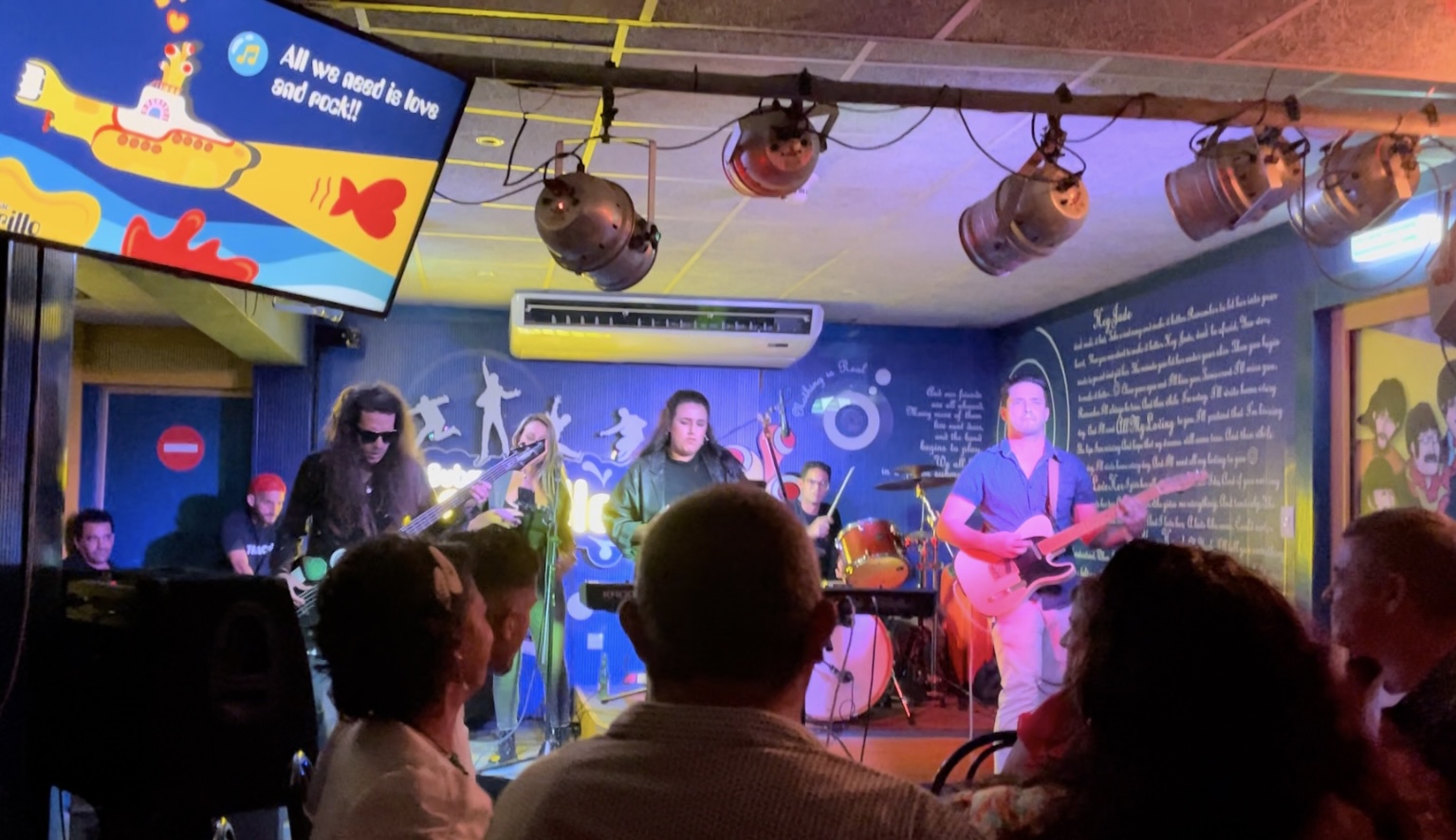
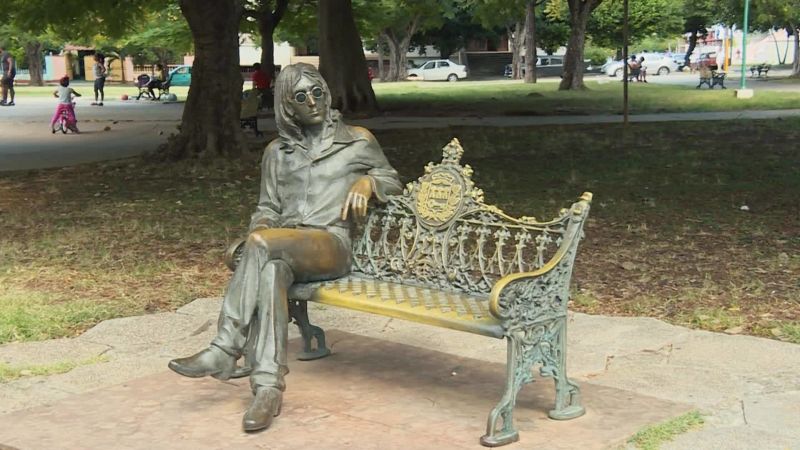
Our Back Room correspondent in Havana was at the very groovy rock club Yellow Submarine last week and saw the Cuban rock band Osamu. They performed soulful covers of songs by Oasis, the Beatles, Bon Jovi, Nirvana, Cee Lo Green, Eric Clapton, Amy Winehouse, Booker T. & the MG’s, the Lumineers, Pink Floyd, Grand Funk, Queen, Maroon 5, and more. Across the street from the Yellow Submarine is the John Lennon Park, with a wonderful sculpture of John. What a great corner… the John Lennon Park and the Yellow Submarine rock club!
Copyright © Govinda Gallery Archive. All Rights Reserved.
Graffiti at Govinda, Graffiti in Havana
The Pump Me Up exhibition of D.C. subculture in the 80′s ends it’s run at the Corcoran Gallery of Art this weekend. Everyone at Govinda Gallery enjoyed the exhibition, and it shined a light on a number of 80′s subculture exhibitions that Govinda has hosted. Here is a review from the Washington Post on the Graffiti show we had in 2001, the first of it’s kind in Washington, D.C.
Copyright © Siek. All Rights Reserved.
Arts Beat
Graffiti at Govinda, Coming In off the Streets
by Nicole Miller
Tuesday, February 22, 2001
Nicholas Posada took a tour some of his artistic handiwork last week. The first stop was behind a commercial building on U Street, another was down an alley off 16th Street NW, then under the P Street bridge east of Dupont Circle.
For five years, Posada, 21, has been spray-painting in the Washington area—sometimes with a building owner’s permission, most times not. Graffiti is illegal in the District of Columbia.
But Posada and his work recently landed in Georgetown—legitimately. His and the works of five other area graffiti artists are on display at Govinda Gallery.
“It really is a genre,” says gallery owner Chris Murray. “They’re all street taggers.”
Murray wanted to host a graffiti show, in part, to give the artists a legal venue, but he also defends their painting on the streets. He believes they choose the appropriate locations.
“It’s in places that frankly look better,’ Murray says. “Technically, whether its legal or illegal, to me it looks good.”
Murray met Posada at the gallery two years ago at a surprise party for Murray’s son’s 16th birthday. He found Posada pouring over art books in the back room; they started talking about the gallery and graffiti art.
A year later they firmed up the dates for a show, and Posada rallied five other artists to participate. The five—Jonny Real, Sest, Siek, SMK and Vove—simply use their “tags” in the show.
“These are the people I respect the most,” Posada says. The show, he adds, is only a “reflection of graffiti.”
“You can’t capture graffiti in a gallery—graffiti is under the bridge,” says Posada, who looks rather clean-cut with his short brown hair, Tommy Hilfiger jacket and Reeboks. His jeans have just a few splatters of paint.
“I like finding places that are real chilled out, relaxed and hidden,” says Posada, works at a deli and waits tables at a restaurant.
He wavers on the question of illegal tagging. In one breath, he says, “It’s kind of childish.” In the next, “It’s real vibrant and impulsive—emotional.”
He settles on: “It’s like a big beast you can’t tame.”
Neil Trugman, a retired D.C. police officer who investigates gangs, teaches other officers about graffiti. A main distinction for the authorities, he says, is between gang graffiti (usually in a single color and used to leave messages) and tagging, often multicolored nicknames composed of big “bubble” letters.
Most taggers aren’t members of a gang, Trugman says. They’re usually kids just trying to top one another with their artistic style and obscure locations.
“They have a talent that doesn’t need to be put on cement walls, it needs to be put on canvas,” he added.
Graffiti art, commonly associated with hip hop music, derives from a tradition of subway art in New York in the 1970s. Many cities have a “hall of fame” or “wall of honor” where graffiti artists do their best work. The District’s “hall of fame” is in a train tunnel in L’Enfant Plaza. Police try to keep taggers out, but on weekend nights you can smell the fresh paint, Trugman says.
Posada’s tag is “Tale,” a shorter version of his nickname, “Nicktale.” Besides being a way to identify themselves to other artists, the short names can be written fast to avoid being caught.
Trugman emphasizes that officers often use counseling to try to deter taggers. But police do make arrests, and those convicted often face community service, probation, fines, jail time or a combination therof. Posada has been arrested four times but doesn’t think he’s doing anything wrong.
He says he started out just “throwing up” his name everywhere. Now, however, he says he does it for the art.
He hopes the gallery show will produce other legal artistic opportunities.
Posada says some of his associates don’t think he should discuss their actions publicly, but he wants people to understand the art.
“I feel I’ve become a better person because of it,” he says.
Posada still paints illegally, too, though he adds, “I might grow out of it.”
Copyright © Tale. All Rights Reserved.
Our Back Room corespondent in Havana photographed some recent graffiti in the capital city of Cuba, and we present it here as part of our tribute to the Pump Me Up exhibition.
Copyright © Celia Sanchez. All Rights Reserved.
Cuba, Baseball, and Walter Iooss Jr.
The New York Times published a story today on Cuba’s victories the last few days over Brazil and China in this year’s World Baseball Classic. It also wrote about the Cuban people’s ongoing love of baseball.
Govinda Gallery had the great pleasure of organizing an exhibition in Havana at Fototeca de Cuba of Walter Iooss Jr.’s baseball photographs. We enjoyed a first hand opportunity to see the tremendous enthusiasm for both Cuban and American baseball on that beautiful Caribbean island.
Baseball Clásico opened on March 4th, 2004 and fans, former and current Cuban baseball players, as well as admirers of photography, attended in droves.
While the exhibition featured Iooss’ photographs of American baseball players, stadiums, spring training, and more, he had also photographed young aspiring baseball enthusiasts on the streets of Havana in 1999.
Iooss told me that of all his photographs the image below is his favorite. He also told me, as most artists have, that he can always see improvements he could make in his images, but that his photo of a young batter about to hit a homemade baseball with the Old Havana neighborhood children looking on, was a perfect picture. I agree.
Havana, Cuba, 1999. Copyright © Walter Iooss Jr. All Rights Reserved.
During Iooss’ Basebal Clásico exhibition I showed the photo, which we used on the invitation card, to cab drivers and horse-and-buggy drivers in Old Havana, hoping to find the very corner where Iooss’ remarkable photo was taken. Iooss had no idea where it was. One afternoon a horse-and-buggy driver I gave the card to knew the location of the photo… In fact, he had lived there. He took me to the very spot where the photo had been taken and the amazing thing was that the kids in the photo were all still living in the neighborhood and hanging out on the corner. I gave the invitation to everyone there and they were delighted to have their corner memorialized in Iooss’ photograph. We returned the next day with cervezas, sodas, juices, chocolate, and more invitation cards, and had a spontaneous party in the street.
Knowing I wanted to show Walter Iooss what had happened in the streets, we reassembled the cast, including the star of the photo, the batter, and took another picture that day recreating Iooss’ original. Everyone had a great time. I could not resist getting in a version of the photo myself. Both photos we reproduce here. I still remain friends with a number of the subjects in the photograph. What a great day it was. Play Ball!
Copyright © José Filosa. All Rights Reserved.
Below is the invitation text from Walter Iooss’ Baseball Clásico exhibition for your reference. Walter Iooss’ photographs are available through Govinda Gallery.
“Walter Iooss, Jr. began photographing baseball as a teenager. One of his first assignments for Sports Illustrated was to capture Roger Maris’s attempt to break Babe Ruth’s home-run record. Since that time, Iooss has continued to photograph the game and its key players, many of whom have become his close friends.
This exhibition features classic images taken during a forty-year period, from Maris’s record-breaking home run in 1961 to McGwire’s in 1998. Iooss has created one of the most definitive portraits of the game with photographs of such legends as Joe DiMaggio, Roberto Clemente, Satchel Paige, Hank Aaron, Willie Mays, Mickey Mantel, Sandy Koufax, Cal Ripkin, and Sammy Sosa, to name just a few. Classic Baseball also includes photographs of ballparks, such as the Polo Grounds, Yankee Stadium, Wrigley Field, and Fenway Park, as well as of the managers and the victory celebrations.
A long-time staff member of Sports Illustrated, Iooss has produced stunning portraits of Olympians, golfers, and basketball players, not to mention his hugely popular Sports Illustrated series of swimsuit model photographs. He has published books on many sports, most recently Classic Baseball: The Photographs of Walter Iooss, Jr., with text by Pulitzer Prize-winning New York Times sports columnist Dave Anderson (Harry N. Abrams, Inc., publisher).
Special thanks to Fototeca de Cuba for hosting this exhibition. Classic Baseball follows the highly acclaimed exhibition, La Revolucion del Rock & Roll (at Fototeca de Cuba in 2002), and is a part of an ongoing artistic exchange between Fototeca de Cuba and Govinda Gallery.”
Christopher Murray, Director, Govinda Gallery
Pump Me Up, Susie J. Horgan, and Washington DC
Musician Alec MacKaye and photographer Susie J. Horgan outside the Corcoran Gallery of Art February 22, 2013. Copyright © Govinda Gallery Archive. All Rights Reserved.
Friday night I attended the opening of Pump Me Up: DC Subculure of the 1980s at the Corcoran Gallery of Art. I loved the exhibition. For anyone who lived in the District of Colombia during the 80s this exhibition is a time machine. The show focuses on DC art and music during that period… graffiti, Go-Go, hardcore, and punk. For the exhibition Govinda Gallery loaned Susie J. Horgan’s iconic photograph of musician Alec MacKaye with an X on each hand. The photograph looks great and was the image used for the banner hanging outside the Corcoran Gallery of Art and in advertisements in metro stations.
Alec MacKaye, Washington, DC, 1980. Copyright © Susie J. Horgan. All Rights Reserved.
There was a great crowd at the opening. I had an excellent time enjoying the show with Lely Constantinople and her husband Alec MacKaye. Lely’s photographs were shown at Govinda Gallery as part of the Itinerant exhibition in the fall of 2001 which also featured work by Cynthia Connolly and Antonia Tricarico.
Punk Love by Susie J. Horgan (Universe, 2007).
At the Corcoran exhibition people were excited to meet Susie J. Horgan, who came with her family from Miami to be at the Pump Me Up opening. Horgans’s photographs of the punk/hardcore scene in DC are an indispensable document of that time. The opening of her exhibition, Punk Love, at Govinda Gallery in 2007 was a night to remember.
Minor Threat, 1982. Left to Righ: Jeff Nelson, Ian MacKaye, Lyle Preslar, and Brian Baker. Copyright © Glen Friedman. All Rights Reserved.
Govinda Gallery has highlighted DC subculture in a number of exhibitions. In the spring of 2000 Govinda hosted Fuck You All, the first exhibition in Washington of Glen Friedman’s photographs of hip hop, punk, and skateboarders. Many of the photographs were taken in Washington. This photo of DC band Minor Threat is one of my favorites.
Govinda Gallery invitation card for the Graffiti exhibition in 2001. Copyright © Govinda Gallery Archive. All Rights Reserved.
By Sest, acrylic on canvas. Copyright © Govinda Gallery Archive. All Rights Reserved.
Govinda Gallery hosted the first graffiti exhibition in a Washington DC art gallery during the winter of 2001. The gallery looked fantastic with the work of 5 graffiti artists on the walls, including Tale, who curated the exhibition with Govinda, as well as work by Jonny Real, Sest, Siek, and SMK.
Chuck Brown. Copyright © Fernando Sandoval. All Rights Reserved.
Govinda Gallery celebrated DC’s own Go-Go music with Fernando Sandoval’s exhibition of photographs; Bustin’ Loose in 2011. Sandoval’s exhibition highlighted Go-Go and Chuck Brown, along with DC blues and soul musicians.